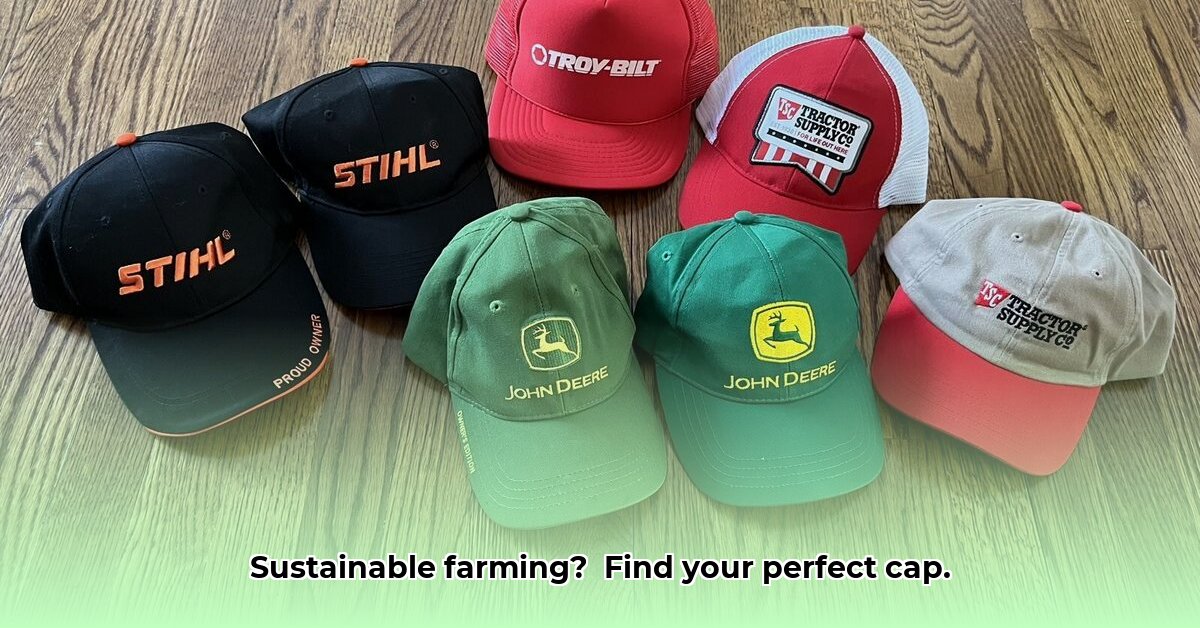
Tractor Supply Caps: Your Guide to Sustainable Choices
Choosing the right tractor supply caps may seem minor, but it's a chance to demonstrate your dedication to sustainable farming practices. This guide helps you make informed decisions that benefit both your farm and the environment. Sustainable farming isn't just a trend; it's a necessity for the long-term health of our planet and the success of your agricultural operation. This guide will help support that important goal. For more local options, check out this Nebraska Tractor Supply.
Understanding Sustainable Materials: Going Green, One Cap at a Time
What defines a “sustainable” tractor supply cap? It's about the entire product lifecycle, from raw materials to disposal. Look for caps made from recycled materials like recycled polyester—giving plastic a second life and reducing landfill waste. Organic cotton is another excellent option, grown without harmful pesticides. Ideally, the cap should also be easily biodegradable at the end of its life. Equally important is the manufacturer's commitment to ethical and sustainable production. Do your research; transparency is key.
Identifying Sustainable Suppliers: Finding the Right Partner
Choosing a company dedicated to environmental responsibility is crucial. How do you identify such suppliers? Look for certifications like Fair Trade or GOTS (Global Organic Textile Standard). These certifications provide assurance of a commitment to sustainability. Responsible companies typically showcase their manufacturing processes, material sourcing, and community impact transparently on their websites. Don't hesitate to contact suppliers directly; ask about their sustainability initiatives. A responsive supplier will gladly share information.
Evaluating Durability and Longevity: The Long-Term View
A durable tractor supply cap is a smart investment, minimizing waste through reduced replacement frequency. This directly reduces your environmental footprint and demonstrates responsible resource management. Look for caps made of strong, high-quality materials with UV resistance to prevent sun damage and extend their lifespan. A well-constructed cap withstands daily farm work, saving you money and promoting sustainable practices, thus delivering long-term economic benefits.
Cost-Benefit Analysis: The Farmer's Bottom Line
While sustainable caps may have a higher upfront cost, the long-term savings from reduced replacements often outweigh this initial investment. A durable, sustainable cap lasts longer than a cheaper alternative. Reducing waste isn't only environmentally responsible but also fiscally sound. Consider the "total cost of ownership"—initial price plus replacement costs over the product's lifespan. You'll likely discover that a more expensive, durable cap is ultimately more cost-effective. This aligns with the broader principle of investing in quality for long-term sustainability and increased productivity of agricultural operations.
Case Study: The Miller Family Farm
The Miller family, known for their commitment to organic farming, switched to durable, recycled polyester caps. They reported significant cost savings on replacements and are pleased to support environmentally responsible practices. Their experience demonstrates that sustainable choices benefit both the environment and the farm's bottom line, highlighting the economic viability of sustainable farming initiatives.
Choosing Your Caps: A Step-by-Step Guide
Here's a practical approach for selecting sustainable caps:
- Assess Your Needs: Determine essential cap features (size, color, etc.).
- Research Suppliers: Seek suppliers with sustainability certifications.
- Compare Materials: Prioritize recycled materials and organic cotton.
- Analyze Durability: Examine materials and construction for longevity.
- Weigh Costs: Balance initial price with long-term savings from fewer replacements.
- Make Your Decision: Select caps and suppliers aligning with your needs and sustainability goals.
Pros and Cons of Sustainable Tractor Supply Caps
A balanced perspective considers both advantages and disadvantages:
| Feature | Pros | Cons |
|---|---|---|
| Materials | Environmentally friendly, reduced waste, often more durable | Might have a slightly higher initial cost |
| Durability | Less frequent replacements, leading to cost savings over time | Requires careful selection to ensure lasting quality |
| Supplier Ethics | Supports ethical and sustainable business practices | May require more research to find suitable options |
| Environmental Impact | Reduced pollution, lower carbon footprint | Potentially higher transportation costs (depending on sourcing) |
Choosing sustainable tractor supply caps is a small but meaningful contribution to a more sustainable future in agriculture. Remember, small changes create significant impacts, and choosing the right cap demonstrates a commitment to environmental stewardship.